
Resources For the Leaders Who Keep Asking Better Questions.
We love your inquisitive mind.
The best leaders do not wait for certainty before they improve the way their teams plan, align, and make decisions. They look for better models, better questions, and better ways to turn complexity into clarity.
This resource library was created for finance, operations, and executive teams who are ready to move beyond reactive reporting and into more confident, connected decision-making.
Select your area of interest below to access templates, checklists, and practical tools designed to help you take the next smart step.
Choose your focus area:
Grow your IBM Planning Analytics (TM1) knowledge with resources to help you get more value.
Explore resources to help you get more value from your Cognos environment.
Reduce planning friction, spreadsheet dependency, and manual rework.
Create greater clarity, accountability, and strategic momentum across your leadership team.
Ready to talk through what Increased Value could look like for your organization?
IBM Planning Analytics (TM1)
Your IBM Planning Analytics journey does not end at implementation.
It gets stronger with the right resources.

Build a planning process that keeps pace with the business
Planning is no longer a once-a-year exercise. Today’s finance and operations teams need planning processes that are dynamic, connected, and resilient enough to support decisions in real time.
IBM Planning Analytics can help organizations move from static forecasts to more agile, driver-based planning. But the technology is only as powerful as the strategy, design, and adoption behind it.
These resources will help you think through the next level of planning maturity, including model design, forecasting discipline, scenario planning, and executive-ready insights.
Use them to assess where your planning process stands today and where it needs to go next.
Downloadable IBM Planning Analytics (TM1) Resources
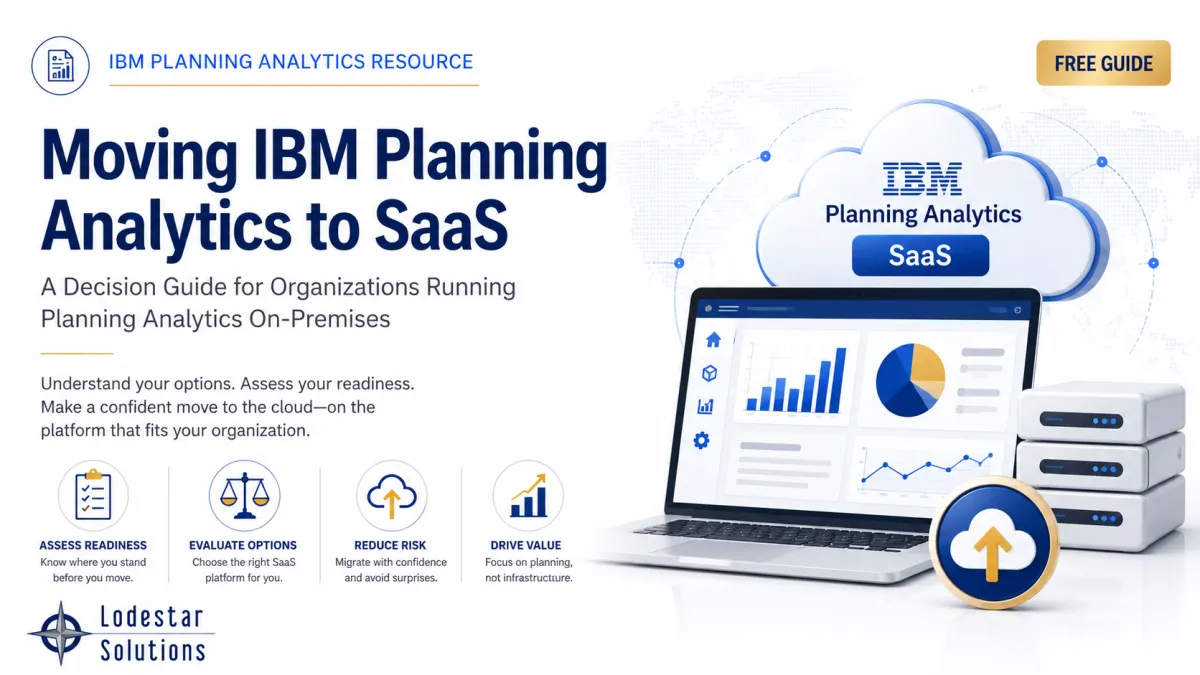
Should You Move to SaaS? A Decision Guide for IBM Planning Analytics (TM1)
Everyone's talking about moving to the cloud, but nobody's telling you if it's actually right for your environment. This guide replaces the guesswork with a straight answer: score your own readiness, see exactly what you'd gain and give up, and find out where migrations really fall apart, so you can decide with confidence instead of hoping you picked right.
No email required. Download and start reading.
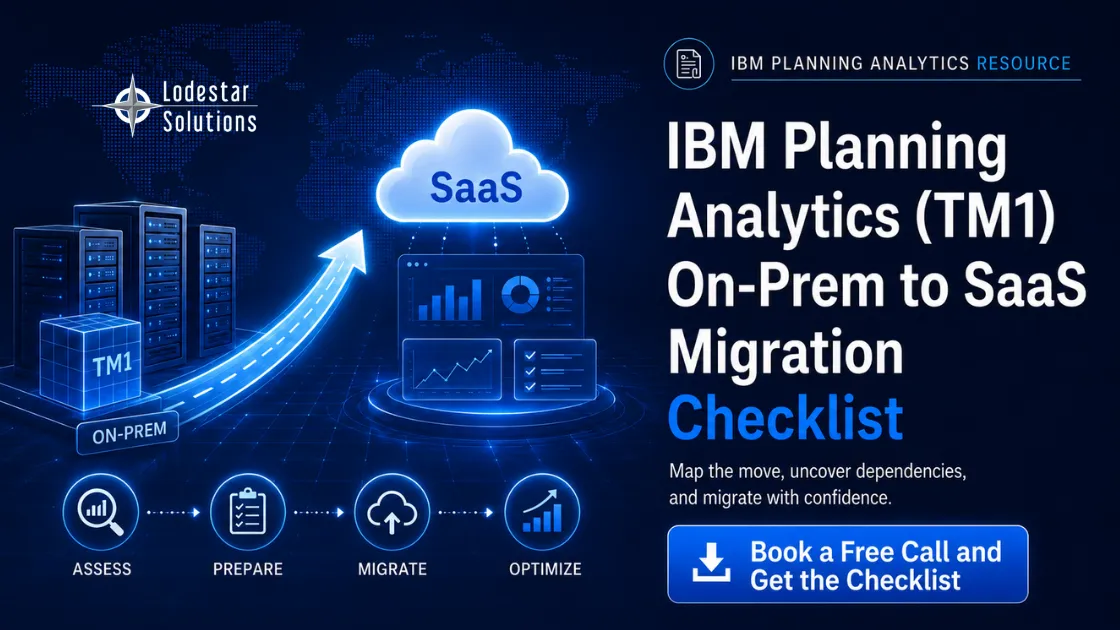
Before You Move IBM Planning Analytics to SaaS, Find the Risks That Could Disrupt Go-Live
IBM Planning Analytics On-Prem to SaaS Migration Checklist
Your models, PAW books, PAfE reports, integrations, security, and data sources all need to be ready before go-live, and the risks that derail migrations are the ones nobody wrote down.
Book a free 45-minute Planning Analytics Migration Review Call and we'll walk through your environment, then send you Lodestar's detailed SaaS Migration Checklist, built around your specific move, not a generic template.
You'll talk to the consultant who leads these migrations, not a sales rep. No cost, no obligation, instant booking.
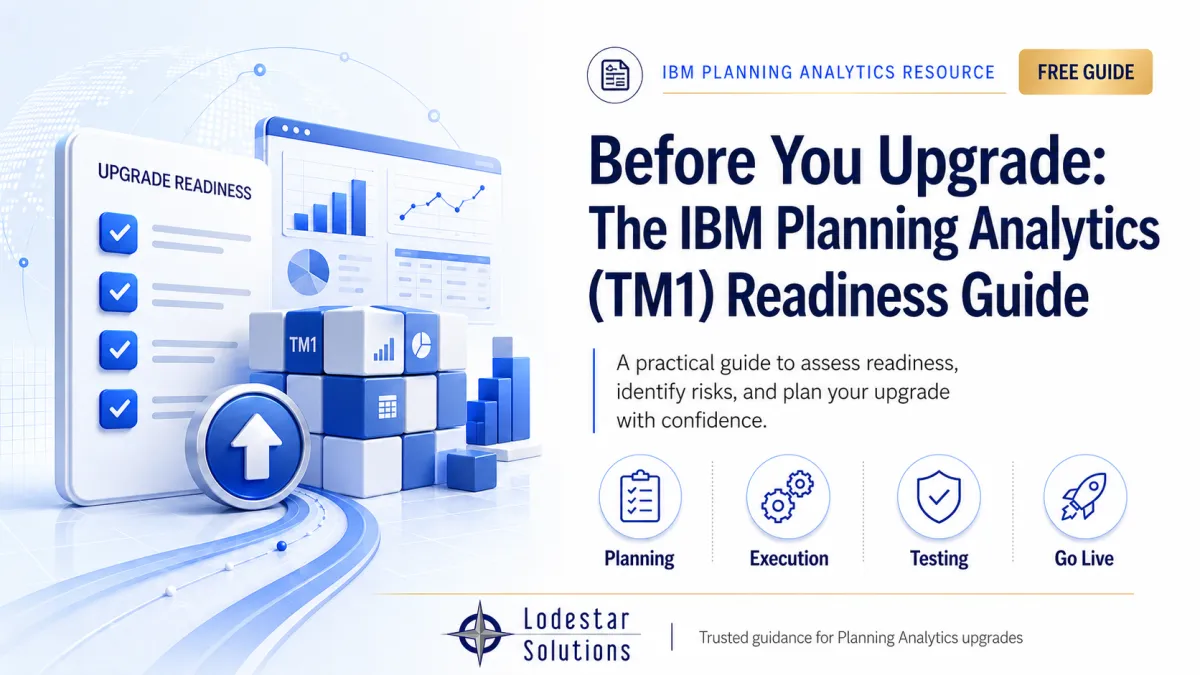
Before You Upgrade: The IBM Planning Analytics (TM1) Readiness Guide
Most upgrade problems aren't caused by the software — they're caused by what nobody documented before cutover. This free guide breaks down the 4-Phase Framework behind every successful on-prem Planning Analytics upgrade, and shows exactly where self-managed projects tend to go wrong.
No email required. Download and start reading.
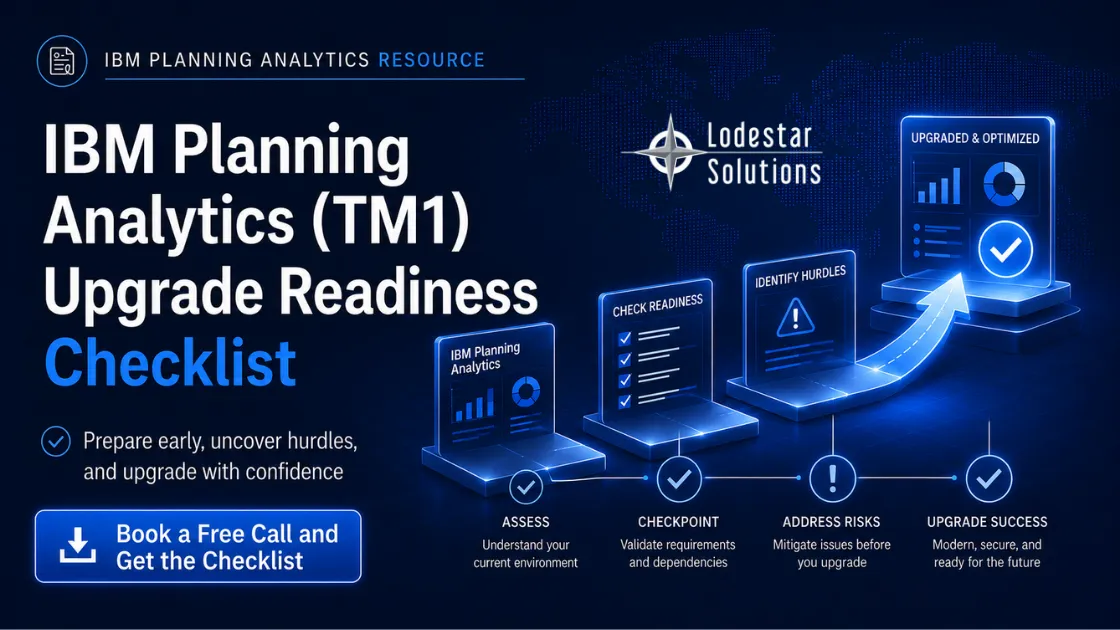
Don't Let a Planning Analytics Upgrade Become a Costly Business Disruption
IBM Planning Analytics Upgrade Readiness Checklist
Upgrading Planning Analytics is more than installing a new version. The risks that disrupt Finance and IT, uncoordinated stakeholders, unvalidated components, missed dependencies, are the ones caught too late.
Book a free 45-minute Planning Analytics Readiness Review Call and we'll walk through your environment, then send you Lodestar's detailed Upgrade Readiness Checklist, built around your specific upgrade, not a generic template.
You'll talk to the consultant who leads these upgrades, not a sales rep. No cost, no obligation, instant booking.
IBM Cognos Analytics
Get more from IBM Cognos Analytics with resources designed
for teams already using the platform.

Turn reporting into a strategic advantage
Cognos should do more than produce reports. At its best, it gives leaders the visibility they need to ask sharper questions, identify risks earlier, and make better decisions with greater confidence.
But many organizations are sitting on underused reporting capabilities. The data exists. The tools exist. The opportunity is to make the insights easier to access, trust, and act on.
These resources are designed to help you evaluate where Cognos can create more value for your team, from stronger reporting structures to better executive visibility.
Use these tools to uncover what is working, where friction remains, and what could be optimized next.
Downloadable IBM Cognos Analytics Resources
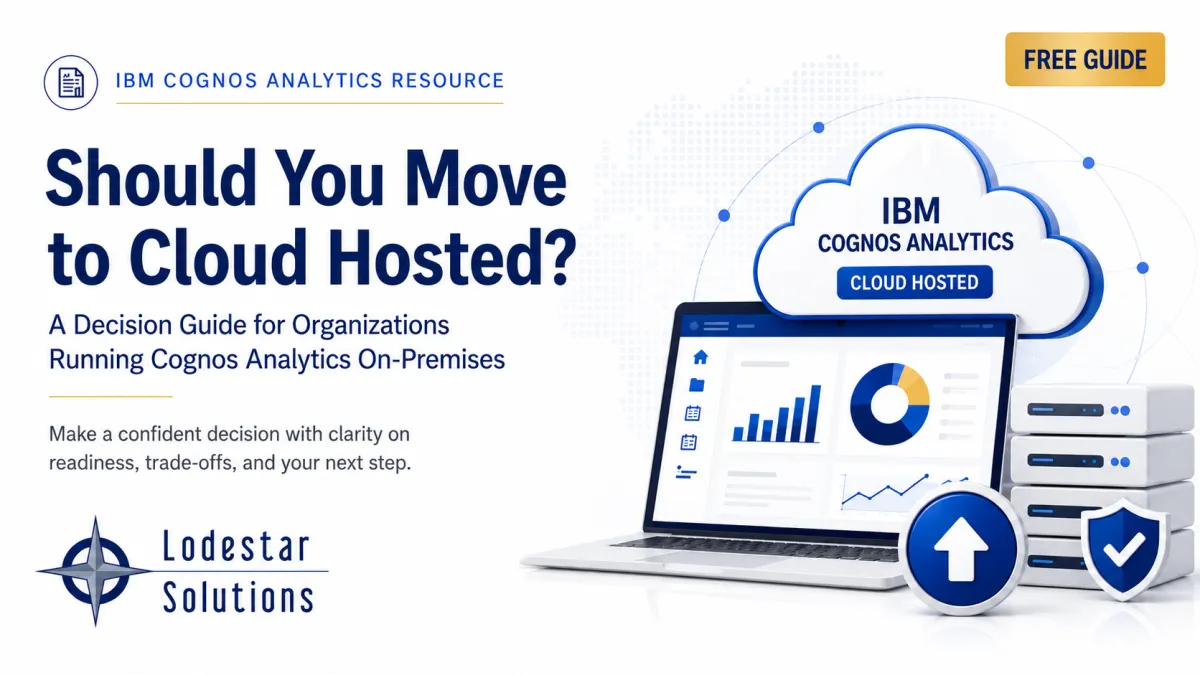
Should You Move Cognos to Cloud Hosted? Get a Straight Answer First.
IBM Cognos: The Cloud Hosted Decision Guide
Cloud Hosted isn't automatically the right move, and staying on-premises isn't automatically safe either. This guide gives you a straight answer: a 6-question readiness self-score, the honest trade-offs, and the real reasons migrations go wrong, so you decide with your eyes open instead of guessing.
No email required. Download and start reading.
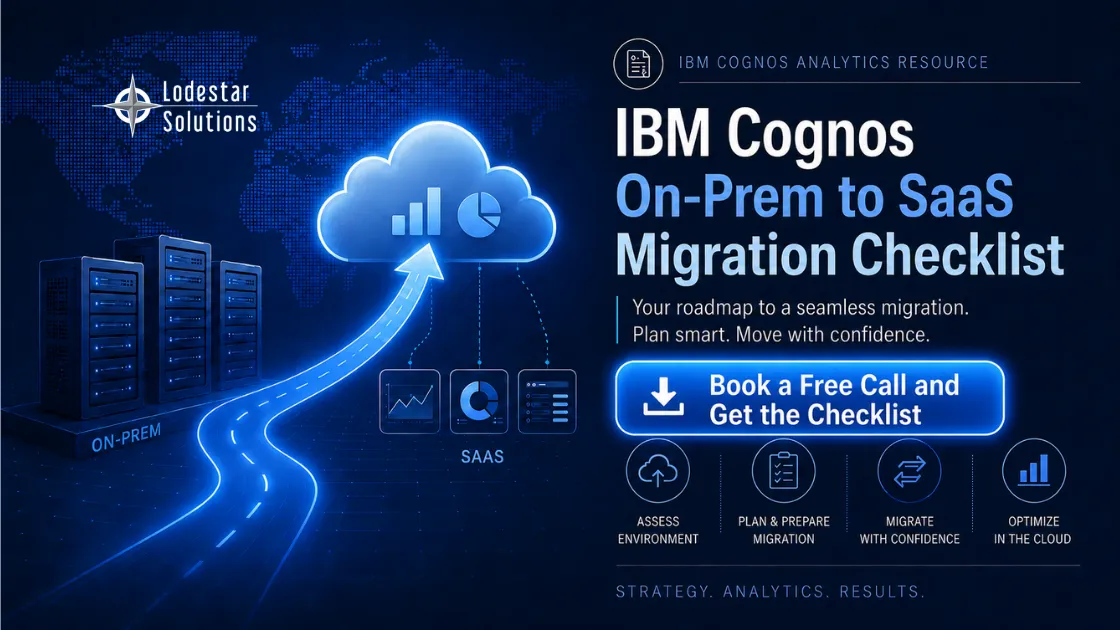
Moving Cognos to Cloud Hosted? Find the Risks Before They Find You.
Cognos On-Prem to SaaS Migration Checklist
Enterprise Cognos environments carry years of reports, Framework Manager packages, data modules, schedules, bursting, security rules, and data sources, and the readiness gaps that cause delays, rework, or reporting disruption are the ones missed before go-live.
Book a free 45-minute Migration Review Call and we'll walk through your environment, then send you Lodestar's detailed Cloud Hosted Migration Checklist, built around your specific move, not a generic template.
You'll talk to the consultant who leads these migrations, not a sales rep. No cost, no obligation, instant booking..
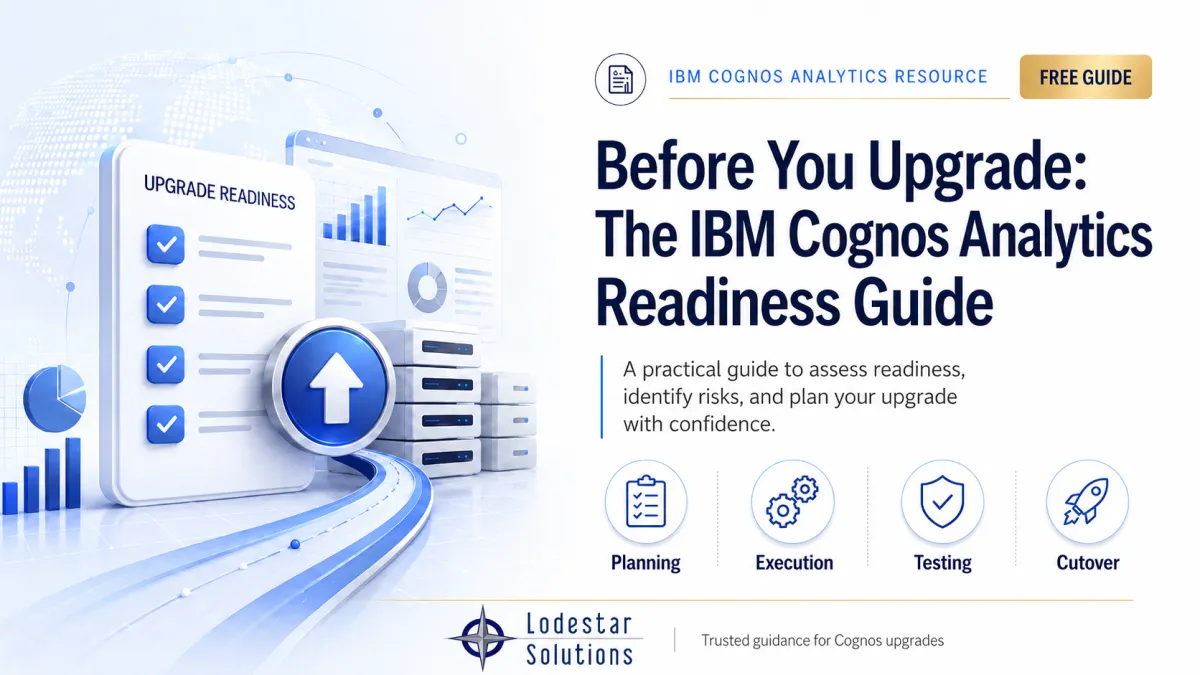
Is Your Cognos Environment Actually Ready To Upgrade?
IBM Cognos Analytics: The On-Premises Upgrade Readiness Guide
Most Cognos upgrade problems aren't the software's fault — they're the deprecated legacy studios, undocumented Framework Manager packages, and hidden dependencies nobody flagged before cutover. This free guide walks through the Lodestar Confidence Upgrade Framework, the same 4-phase methodology behind our Enterprise Upgrade Checklist, so you catch the risks before they become expensive.
No email required. Download and start reading.
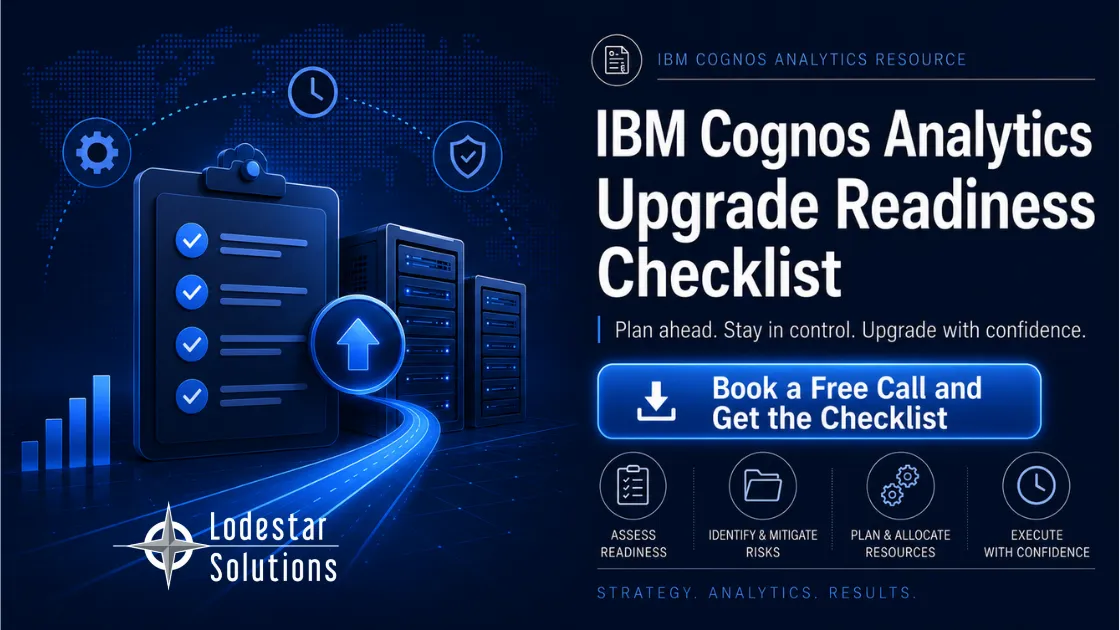
Don't Let a Cognos Upgrade Put Your Reporting Environment at Risk
Cognos Analytics Upgrade Readiness Checklist
Upgrading Cognos Analytics is more than installing a new version. The risks that disrupt reporting, unvalidated components, uncoordinated stakeholders, missed dependencies, are the ones caught too late.
Book a free 45-minute Cognos Analytics Readiness Review Call and we'll walk through your environment, then send you Lodestar's detailed Upgrade Readiness Checklist, built around your specific upgrade, not a generic template.
You'll talk to the consultant who leads these upgrades, not a sales rep. No cost, no obligation, instant booking.
IBM Licensing & SaaS
For Organizations that Own IBM Planning Analytics, IBM Cognos Analytics or SPSS and Want to Understand IBM Licensing.
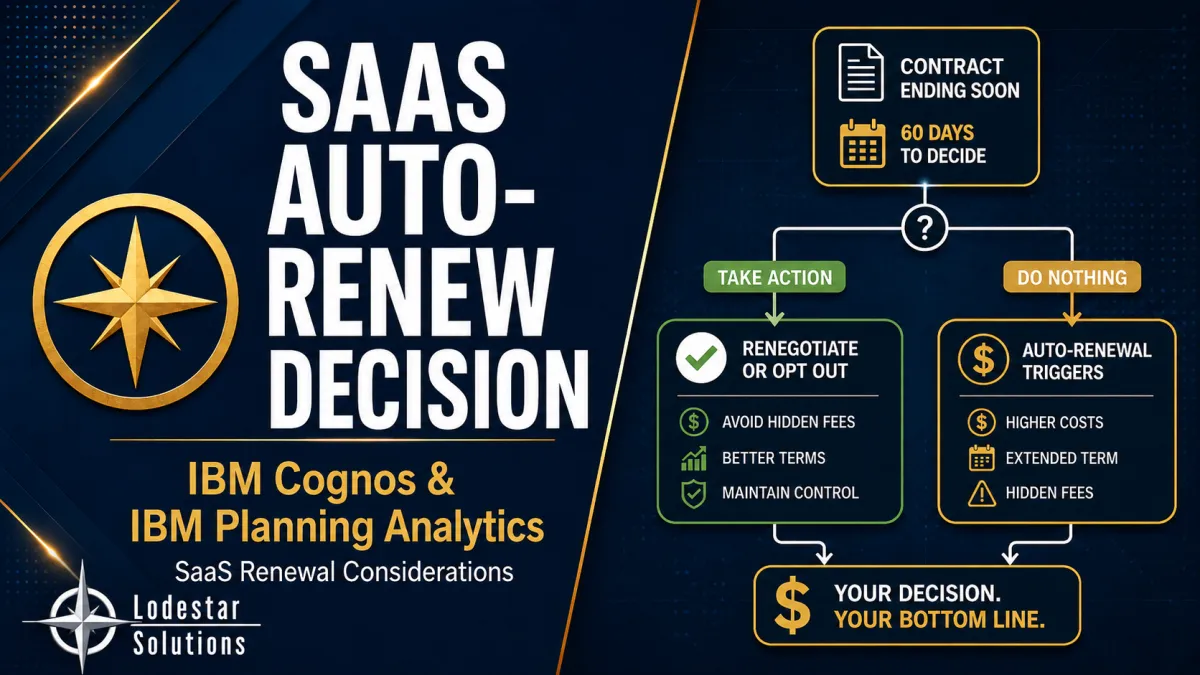
Click on the image above to play video
IBM Cognos & Planning Analytics Licensing Review
Are you overpaying for IBM Cognos or Planning Analytics licensing?
Most companies are, and most don't find out until an audit forces the issue. Software licensing works a lot like your cell phone bill: the plan that made sense five years ago might be costing you thousands today.
In this video, IBM Lifetime Champion Heather Cole breaks down what every IBM Cognos Analytics and Planning Analytics customer needs to know before their next renewal, including the PVU licensing trap that can trigger a six-figure audit surprise, why Planning Analytics almost always requires BOTH server (PVU) and user licenses (and why missing that costs you), and whether moving from on-premise to SaaS could actually lower your total cost of ownership.
If you've ever asked "what the heck do I even own?" when your IBM renewal invoice shows up, this one's for you.
In this video you'll learn:
The difference between Authorized User and PVU licensing (and which one is actually cheaper for your team)
Why ILMT matters and what happens if you don't have it installed
Why Planning Analytics customers often get caught off guard by dual licensing requirements
How to know if switching to SaaS makes financial sense for your organization
What IBM auditors actually look for, and how to get ahead of it
Go Deeper: IBM Licensing Explained
Check Out Our Blogs Below To Learn More About Your IBM Licensing
Moving Beyond Excel
Outgrown your planning tools?
Build a stronger foundation for uncertainty, growth, and strategic decisions.
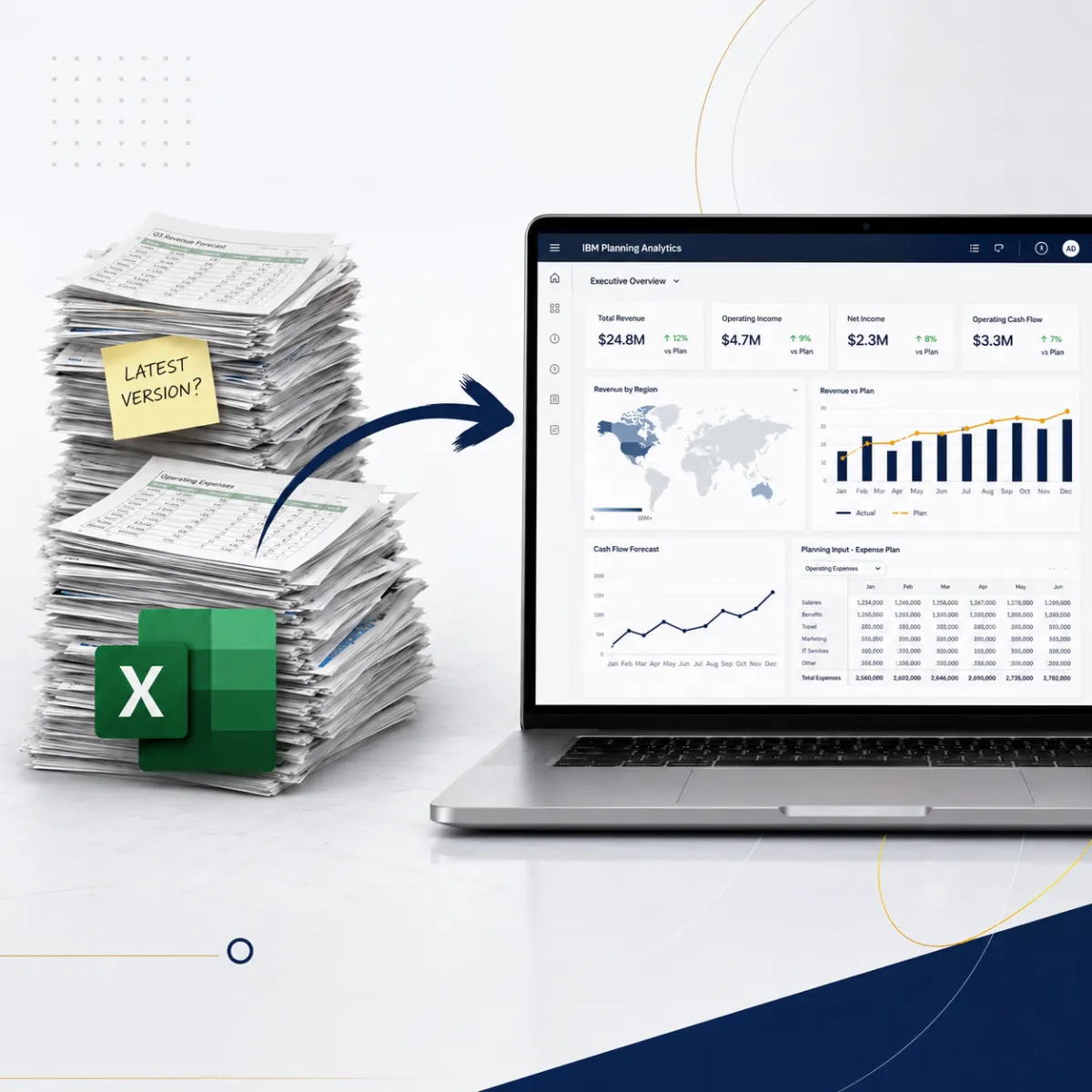
Build a planning process that keeps pace with the business
Your planning process should not depend on heroic spreadsheet management.
Excel is powerful, familiar, and flexible. It is also where many planning processes become fragile, manual, and difficult to scale.
When planning depends on disconnected spreadsheets, teams spend too much time reconciling numbers, chasing versions, and rebuilding reports instead of analyzing what the business needs next.
Moving beyond Excel does not mean abandoning everything your team knows. It means creating a more connected, governed, and scalable planning environment that reduces risk and gives leaders better visibility.
These resources will help you evaluate when Excel is helping, when it is holding you back, and what a smarter planning process could look like.
Are Your Planning Models Outdated? Here's What It's Really Costing You.
Your model still runs. It still spits out a forecast every month. So why does it feel like it's working against you instead of for you? Whether you're still budgeting in Excel or you already own IBM Planning Analytics but haven't touched your model in years, this video breaks down the real cost of an outdated FP&A process, and why fixing it doesn't mean ripping everything out and starting over.
In this video, you'll learn:
The 2 versions of "outdated" (Excel-bound teams vs. stale Planning Analytics models)
What flying blind on a stale forecast actually costs your business
Why modernizing your planning process doesn't have to mean a full replacement
The real first step to fixing it (hint: it's not a demo)

Downloadable Move Beyond
Excel Resources
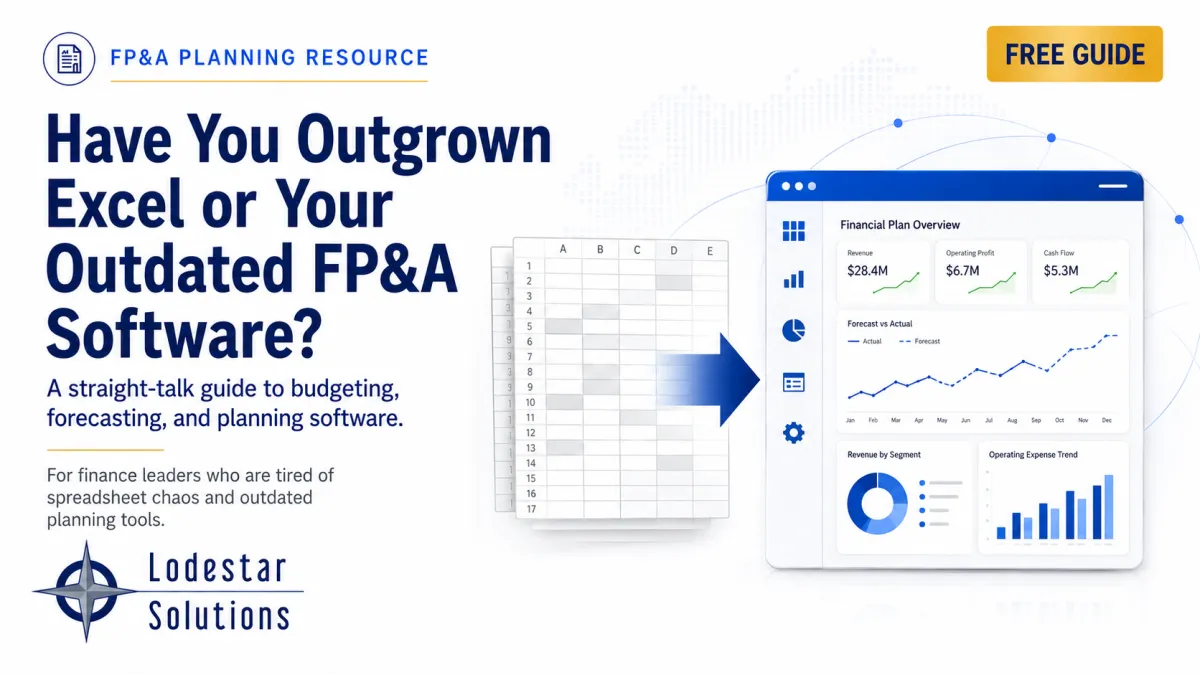
You already know something's broken. This tells you what to do about it.
A straight-talk guide to financial planning, budgeting, and forecasting software, for finance leaders who suspect they've outgrown Excel, or the software that replaced it, but aren't sure if the answer is new software, a better process, or both. No email required. No sales pitch. Just 7 honest signs, the real cost of flying blind, and the exact questions to ask before your next vendor demo.
No email required. Download and start reading.
Planning & Budgeting Software Selection Checklist
Choose your next FP&A platform with confidence—not just a polished vendor demo.
Selecting the right planning and budgeting solution is more than comparing features. The decisions that lead to costly implementations, undefined requirements, misaligned stakeholders, inconsistent vendor evaluations, are the ones made without a framework.
Book a free 45-minute Software Selection Review Call and we'll walk through your requirements, then send you Lodestar's detailed Software Selection Checklist, built around your specific selection, not a generic template.
You'll talk to the consultant who leads these evaluations, not a sales rep. No cost, no obligation, instant booking.
Make your next software decision with confidence by evaluating the right criteria before selecting your FP&A platform.
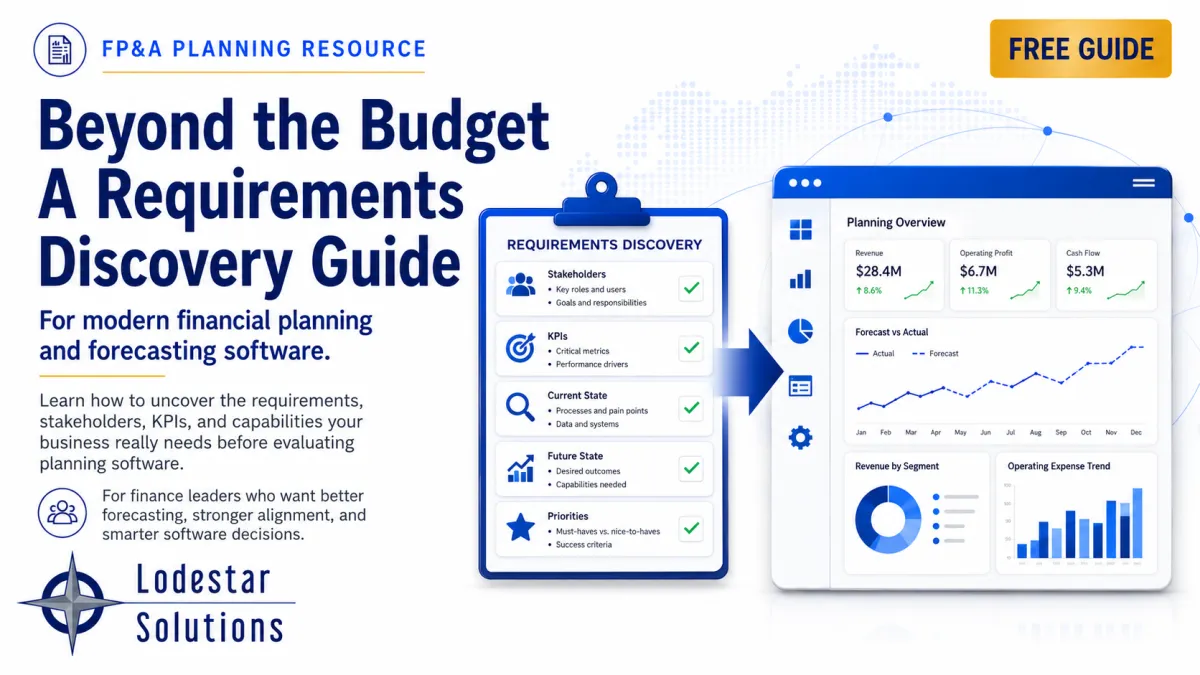
Beyond the Budget: A Requirements Discovery Guide for Modern Planning and Forecasting Software
Before you evaluate a single vendor, find out what your organization actually needs its planning process to do. This free guide walks through the four-phase discovery framework we use with mid-market and enterprise finance teams, the questions that surface real requirements, and a true story about a client who avoided a costly software switch by asking the right questions first.
What's inside:
A four-phase framework for running planning software discovery
Real discovery questions organized by stakeholder: CFO, FP&A, Operations, IT
How to tie every requirement to a measurable KPI
Why the right answer might be your current platform, not a new one
No email required. Download and start reading.
Strategy & Alignment
AI without alignment will not fix the chaos. It will amplify it.

Alignment is the multiplier behind every successful strategy
Most organizations do not fail because they lack smart people or ambitious goals. They struggle because leaders are not fully aligned on priorities, decisions, ownership, and execution.
When alignment is strong, teams move faster. Tradeoffs become clearer. Accountability improves. Strategy becomes something the organization can actually execute.
These resources are designed to help leadership teams create clarity around what matters most, where misalignment is slowing progress, and how to build a stronger operating rhythm.
Use these tools to spark better conversations, sharpen decision-making, and create momentum across your executive team.
Downloadable Executive alignment Resources
Executive Alignment Scorecard
Is your leadership team truly aligned, or just agreeing in meetings?
Misalignment at the executive level creates slow decisions, unclear priorities, competing initiatives, and unnecessary friction across the business. The Executive Alignment Scorecard helps leadership teams quickly assess where they are aligned, where gaps exist, and what needs attention before strategy execution breaks down.
What You’ll Get
A simple scorecard to assess executive alignment
Key questions to uncover hidden gaps in priorities, ownership, and decision-making
A clearer view of where leadership friction may be slowing progress
A practical starting point for stronger strategic focus and accountability
A clearer view of where leadership friction may be slowing progress
A practical starting point for stronger strategic focus and accountability
Use this scorecard before misalignment turns into missed goals, stalled initiatives, or costly rework.
No email required. Download and start reading.
Strategic Priorities Template
Stop trying to do everything—focus on the initiatives that matter most.
Successful organizations don’t win by pursuing every opportunity. This template helps executive teams identify, prioritize, and align around the initiatives that will deliver the greatest business impact, ensuring resources, investments, and efforts support long-term strategic goals.
A free strategic priorities planning template
A framework for identifying and prioritizing your highest-impact business initiatives
Guidance for aligning executive leadership, business teams, and IT around shared organizational goals
A consistent approach for evaluating opportunities and making more informed investment decisions
Greater focus, accountability, and execution across your strategic initiatives
No email required. Download and start reading.
Presentation Techniques
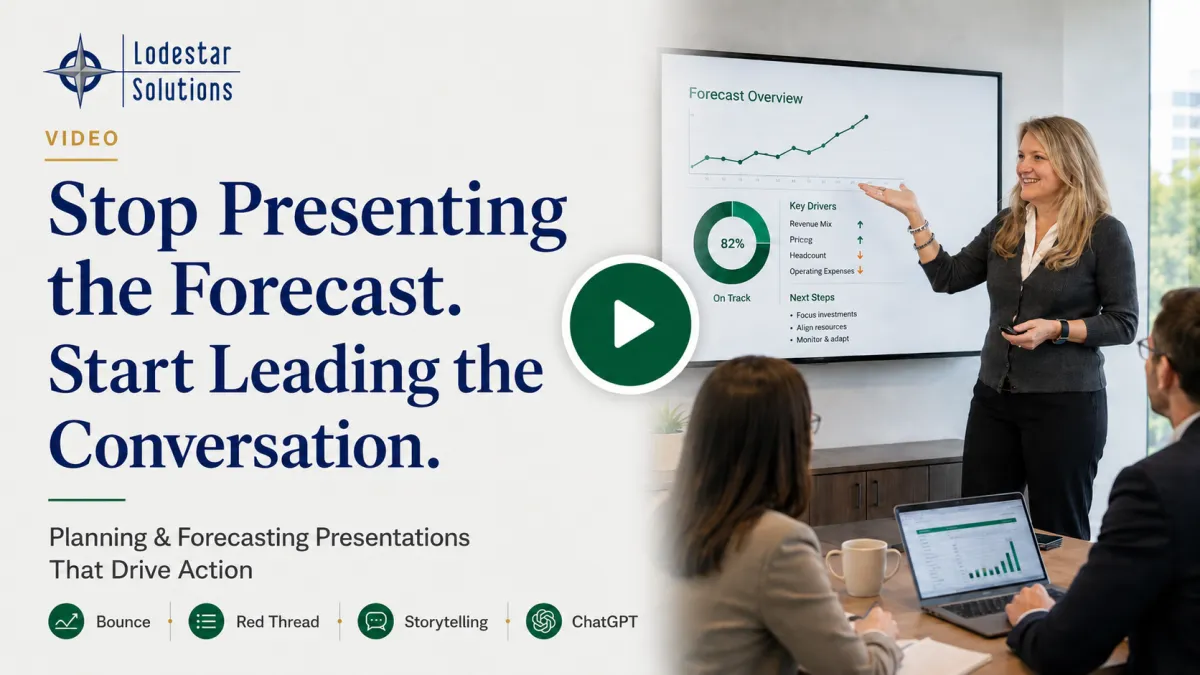
The number is not the story. The number is just a clue.
If your planning and forecasting meetings feel flat, if people nod along and then walk out and do whatever they were already going to do, the problem isn't your data. It's how you're presenting it.
In this video, executive advisor and analytics coach Heather Cole breaks down the exact speaking techniques she's used for 25+ years in the Office of Finance to turn dry forecast reviews into leadership moments that drive real alignment and ownership.
You'll learn:
The "bounce" technique that gets executives mentally leaning into your presentation in the first 3 minutes
How to build a "red thread" so your key message sticks long after the meeting ends
Why planning fails when departments operate on different assumptions, and how to fix it
A simple structure (Number → Meaning → Decision → Action) that turns any metric into a business story
How to use AI tools like ChatGPT and Claude as a storytelling partner, quote generator, and analogy engine for your next board or leadership presentation
Are your demos landing, or just going through the motions?
Great speaking techniques don't help if nobody's grading whether you actually used them. The Demo Scorecard gives you a simple, repeatable way to score every demo, yours or a colleague's, against the specific behaviors that separate a forgettable walkthrough from a presentation that drives real decisions.
What You'll Get:
A 1-5 rubric covering 15 presentation behaviors, from requirements discovery and prework through delivery, objection handling, and close
A direct way to apply the "Start with the End" and "Leverage Bounce" techniques from the video above
A prompt to name the one thing the speaker should improve next, so every scorecard ends with an action, not just a grade
A tool you can use solo before a big meeting, or bring into team practice runs and peer coaching sessions
Use this scorecard before your next client demo, so you find the gaps in rehearsal instead of in front of the client.
No email required. Download and start reading.

Subscribe to our email list to get the latest insights, resources, and event updates sent straight to your inbox (without any spam).

© 2026 Lodestar Solutions, Inc. - All Rights Reserved.


